
Why Upholstery Cleaning Is Often Missed in Tenancy Cleaning
Upholstery Cleaning
Upholstered furniture is frequently neglected during move-out cleaning because attention is often directed toward visible surfaces and fixtures. However, fabric items such as sofas, chairs, and headboards are routinely assessed during inventory inspections and can influence deposit deductions if not properly maintained. Ensuring these items are cleaned to an acceptable standard helps support a smooth handover at the end of a tenancy.
- Soft furnishings are routinely included in official inventory reports and are subject to inspection standards.
- Fabric surfaces accumulate oils, dust, and odours that are not removed through basic vacuuming.
- Many tenancy agreements require returning items in a condition consistent with the original check-in report.
- Professional fabric treatment helps address deep-set stains that are not visible on the surface alone.
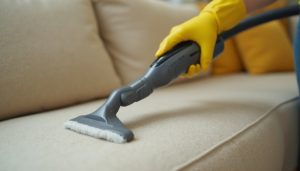
Move-out day has a way of turning even the most organised person into a headless chicken. You’ve spent the weekend scrubbing the oven, bleaching the bathroom grout, wiping down skirting boards you never once noticed during the whole tenancy — and by the time you hand the keys back, you’re convinced the place is spotless. Then the check-out report lands in your inbox two days later and there it is: the sofa. Fabric marked as soiled. Odour noted. A deduction proposed. And the horrible, sinking realisation that you never once thought to clean it.
This happens more often than most people expect. Upholstery cleaning is one of the most consistently overlooked parts of the end of tenancy process, and it’s not always down to laziness. A lot of tenants simply don’t know it’s expected — or assume that a quick vacuum takes care of it.
Why Tenants Skip the Sofa
There’s a fairly predictable pattern to why upholstery gets left off the cleaning list. For a start, most people associate tenancy cleaning with surfaces — floors, worktops, windows, kitchen appliances. Furniture feels different somehow, more personal, even when it belongs to the landlord.
In furnished flats, tenants often develop a kind of unconscious ownership of the furniture. You’ve sat on that sofa for two years. It feels like yours. The idea that it needs to be professionally cleaned before you leave doesn’t always cross your mind in the same way that, say, defrosting the freezer does.
There’s also the assumption that vacuuming counts. Run a hoover over the cushions, flip them over, maybe give it a spray with some fabric freshener — job done, right? Not really. Vacuuming lifts surface debris, but it doesn’t touch the oils and sweat that have worked their way into the fabric over months of regular use. It doesn’t deal with staining, and it certainly doesn’t remove embedded pet hair or the kind of odours that only become obvious once the flat is empty and the windows are closed.
Some tenants also underestimate how closely letting agents and inventory clerks actually look at furniture. There’s a tendency to assume that soft furnishings will be given a bit of leeway — that the bar for upholstery is lower than it is for carpets or tiling. That assumption tends to be wrong.
What Letting Agents and Landlords Are Actually Looking For
The check-out inspection is a comparison exercise. The clerk goes through the original inventory — often with photographs — and checks the current state of the property against what was recorded when you moved in. Every item on that inventory is assessed, and furnished flats usually have a lot of items: sofas, armchairs, dining chairs, bed frames, headboards, sometimes mattresses too.
If the inventory described the sofa as “clean, no marks, no odour” at the start of the tenancy, that’s the standard it needs to be returned to — fair wear and tear aside. A faint smell of takeaway and a greasy armrest isn’t fair wear and tear. Staining from drinks or food isn’t either. Pet hair ground into the fabric of a chair will absolutely be flagged, particularly if no pets were listed on the tenancy agreement.
What surprises a lot of tenants is that landlords don’t need the upholstery to look brand new. They just need it to be clean. The distinction matters, because it means professional upholstery cleaning — rather than replacement — is usually all that’s needed to satisfy a check-out. But if you don’t arrange that cleaning before you leave, the landlord gets to arrange it afterwards and bill you for it. And when a landlord organises cleaning on your behalf, you rarely get the cheapest quote.
What Professional Upholstery Cleaning Actually Involves
It’s worth being clear about what professional upholstery cleaning means in practice, because a lot of people picture something more dramatic or invasive than it actually is.
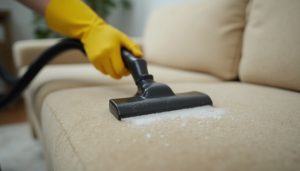
The most common method used in domestic settings is hot water extraction — sometimes called steam cleaning, though the process is slightly different. A machine injects hot water and a cleaning solution deep into the fabric fibre, then extracts it along with the loosened dirt, oils, and bacteria. It’s thorough in a way that no surface-level clean can replicate, and it’s safe for most upholstery fabrics when done correctly by someone who knows what they’re doing.
For more delicate fabrics — certain velvets, wool blends, or older furnishings — dry cleaning methods are used instead. These use low-moisture compounds that break down soiling without saturating the fabric, which reduces the risk of shrinkage or damage.
Both methods address things that DIY approaches simply can’t: deep-set staining, biological residue, odours that have bonded with the fibres rather than just sitting on the surface. A professional will also spot-treat specific stains before the main clean, which significantly improves the results on anything particularly stubborn.
After the clean, most upholstered pieces take a few hours to dry fully — something worth factoring in if you’re working to a tight move-out schedule.
The Cost vs. Deposit Argument
This is the part that tends to make tenants feel a bit sheepish. Professional upholstery cleaning for a sofa and a couple of chairs typically costs a fraction of what a landlord might deduct from a deposit if the work is left undone.
Deposit deductions for unclean upholstery tend to land somewhere between £80 and £200 or more depending on the number of pieces and the extent of the soiling. A professional clean arranged before the check-out inspection usually costs less — and more to the point, it removes the issue entirely rather than leaving it open to dispute.
The deposit protection schemes used in the UK do allow tenants to challenge deductions, but that process takes time, can be stressful, and isn’t guaranteed to go in your favour if the evidence clearly shows the furniture was returned in a worse state than it was received. Spending a bit on cleaning beforehand is just a cleaner resolution — in every sense.
Furnished Flats in London: A Bigger Risk Than Most Realise
London has an unusually high proportion of furnished rental properties. The city’s rental market moves fast, and landlords who keep their flats furnished can turn them around more quickly between tenants. That’s great for convenience when you move in, but it does mean that by the time you move out, there’s often quite a lot of upholstered furniture that needs to be accounted for.
A typical furnished flat in London might have a two or three-seat sofa, an armchair, a dining chair or two, a bed frame with an upholstered headboard, and sometimes a mattress listed on the inventory. That’s five or six upholstered items that all need to be in clean, acceptable condition on the day you leave.
Carpets tend to get cleaned because tenants know they’ll be scrutinised. Windows get done because the streaks are visible from across the room. Upholstery slips through the net because no one really thinks about it until the check-out report makes them think about it — and by then, it’s too late.
Getting It Right Before You Leave
If you’re approaching the end of a tenancy in London, take another look at the original inventory and make a list of every upholstered item in the flat. Check each one against how it looked when you moved in. If there’s any noticeable difference — staining, odour, pet hair, general dullness to the fabric — it’s worth getting it professionally cleaned before the inspection rather than after.
At Bobs Tenancy Cleaning, upholstery cleaning can be added alongside a full end of tenancy cleaning London service, so you’re not having to coordinate multiple companies or book separate visits. Everything gets done in one go, and you leave knowing the flat has been handed back properly — furniture included.
FAQ
Common Questions on Cleaning Before Moving Out