
WORKSPACE, READY FOR WORK
Office cleaning
London
A practical clean.
A clear brief.
Office cleaning starts with how your workplace is used. Talk to Bob’s about desks, shared rooms, washrooms and access so the work fits the premises and your business day.
A WORKPLACE BRIEF
Count the spaces.
Then consider the use.
An office with ten desks can be quiet most of the week or busy every day. Meeting rooms may be shared with visitors, the kitchen can serve several teams, and washrooms have a different pattern of use from a storage room. A useful cleaning brief records those differences rather than relying only on a floor area or a headcount.
Bob’s can discuss office cleaning for London workplaces, including occupied premises and spaces being prepared for a change of tenant. Tell us whether you need a focused visit or want to discuss a continuing arrangement. Frequency, team size and timing need agreeing for your site; they should not be assumed from a domestic cleaning rate or a generic package.
Walk through the premises in working order when preparing your list. Start at the entrance, then note desks, meeting rooms, kitchen areas, toilets and floors. Identify spaces that must stay in use and any room the cleaner should not enter. A clear brief reduces interruptions and gives both sides a practical way to check the work afterwards.
DESKS & SHARED EQUIPMENT
Clear desks.
Clear responsibilities.
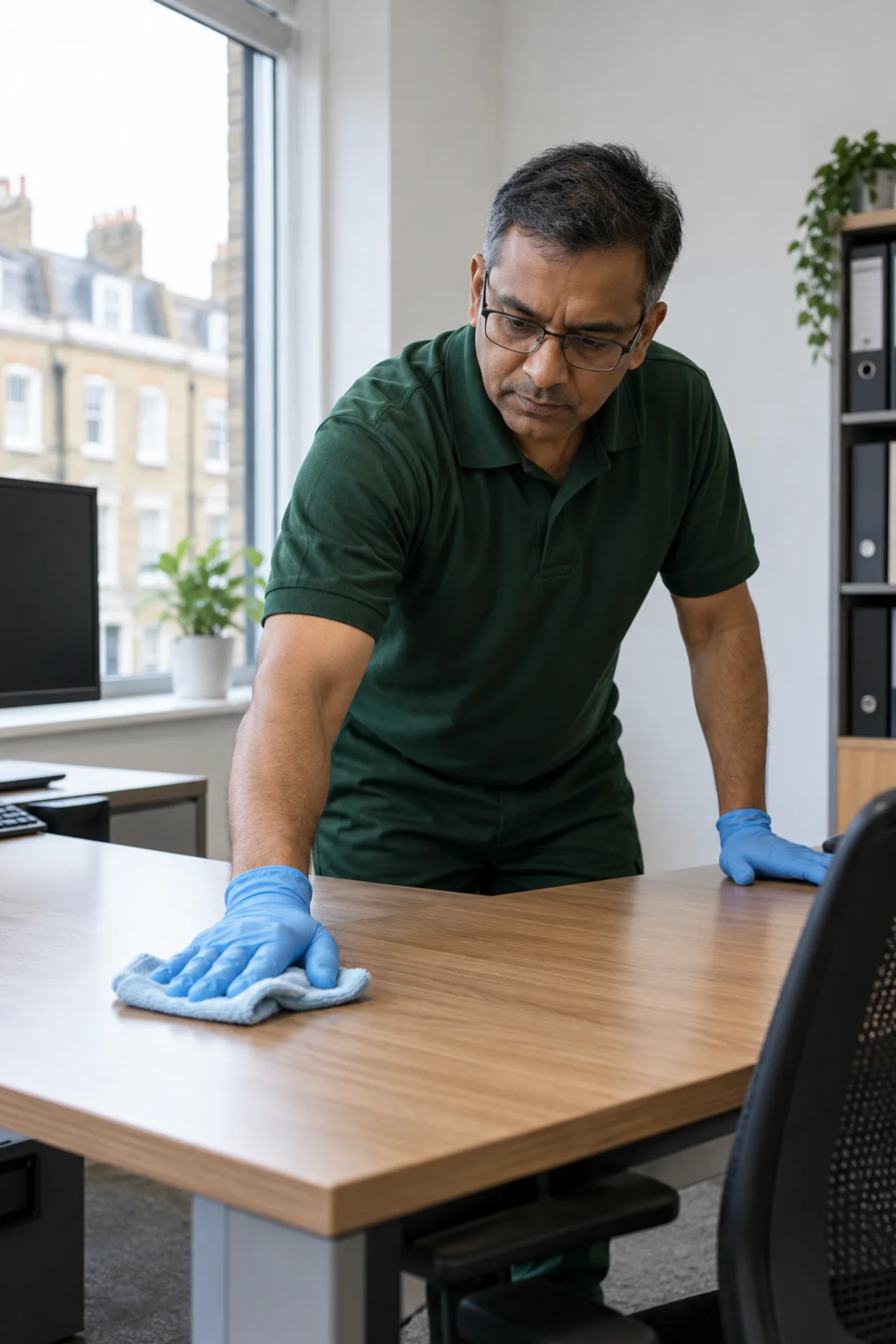
A cleared desk can be wiped without moving confidential papers or unplugging equipment. Ask staff to put documents away before the visit and identify any area where items must remain undisturbed. Cleaning should not become an informal filing exercise. If a desk is covered in paperwork, agree whether the accessible surface will be cleaned or the area left until it is cleared.
Computers, monitors and shared electronics need specific care. A general office clean is not internal equipment maintenance. Do not expect keyboards to be dismantled, screens to be sprayed or devices disconnected. Identify the approved approach for surfaces around equipment and make your organisation’s restrictions available before the first visit.
Shared touchpoints such as door handles and cupboard handles can be included in the brief, but a routine clean should not be described as making a workplace sterile. If you need a particular infection-control procedure, specify it separately and confirm the available scope. Ordinary office cleaning is not a substitute for clinical cleaning or a specialist response to hazardous contamination.

KITCHENS, WASHROOMS & FLOORS
Shared rooms need
their own checklist.
The kitchenette is often where a general brief becomes too vague. Decide whether dishes, fridge contents or internal appliances are included. An old lunch container is not automatically something a cleaner can discard. Set a simple policy for staff possessions and food, and make it clear which items may be moved or disposed of.
Washrooms need a reliable route for cleaning without leaving staff unsure whether a room is available. Discuss how facilities will be taken out of use temporarily and where consumables are kept. Supplying paper products, soap or bin liners should be explicitly agreed; a clean washroom and a stocked washroom are related but separate requirements.
| Area | Tasks to agree | Site detail |
|---|---|---|
| Workstations | Accessible desk surfaces and surrounding floors. | Clear documents and identify restricted equipment. |
| Meeting rooms | Tables, accessible surfaces and floor care. | Confirm when rooms are free. |
| Kitchenette | Sink, worktops and agreed appliance exteriors. | Internal appliance cleaning is a separate task. |
| Washrooms | Basins, toilets and accessible surfaces. | Discuss supplies and access during work. |
| Entrances and floors | Vacuuming or suitable hard-floor cleaning. | Flag floor materials and wet-floor routes. |
ACCESS & SECURITY
The route through
the building matters.
City offices often involve reception procedures, building managers, shared lifts and loading rules. Give the site contact’s details and explain how the team will enter, where equipment can be brought in and which areas are within your tenancy. A booking for your office should not accidentally include a communal corridor maintained under a different contract.
If the visit is outside your normal working hours, agree keyholding and alarm arrangements directly. Avoid leaving passwords or access codes in a public room note. Confirm who can answer a question while the site is unattended and how the premises should be left afterwards. A named contact is more useful than expecting the cleaner to make security decisions alone.
Mention restricted rooms, delicate displays and any task requiring your internal approval. If your building requires documentation before contractors can attend, request it early and confirm what is available. Do not treat a marketing description as proof of a specific accreditation or site clearance. The arrangement needs to satisfy the actual requirements of your premises.

COMMERCIAL PRICING
A quote built
around the premises.
Office cleaning is quoted for the site. There is no single verified standard office rate suitable for every workplace, and a domestic hourly figure would not describe the same brief. Request a quote with the rooms, tasks, frequency and access arrangements specified. Where several decision-makers are involved, use the same brief so that revisions can be compared properly.
Ask what the total includes, whether equipment or consumables are included and how a change to the scope will be handled. Check any minimum booking, applicable taxes or access-related charges in the quotation. If a larger clean is needed at the beginning, distinguish that initial work from the ongoing requirement instead of assuming both cost the same.
The cheapest headline amount may leave essential tasks undefined. A better comparison asks whether washrooms, kitchen areas, floors and cleared desks are all covered at the required frequency. If a room is used less often, say so; if a reception sees daily foot traffic, identify it as a priority rather than spreading attention evenly across every space.
| Factor | Provide | How it affects the brief |
|---|---|---|
| Layout | Floor area, rooms and floors. | Sets the spaces and routes to be cleaned. |
| Use | Staff attendance, visitors and busy facilities. | Helps set priorities and frequency. |
| Timing | Working hours and access windows. | Determines how disruption can be managed. |
| Scope | Routine tasks and specialist requests. | Separates general work from additional services. |
SPECIALIST WORK & LIMITS
Different surfaces.
Different treatment.
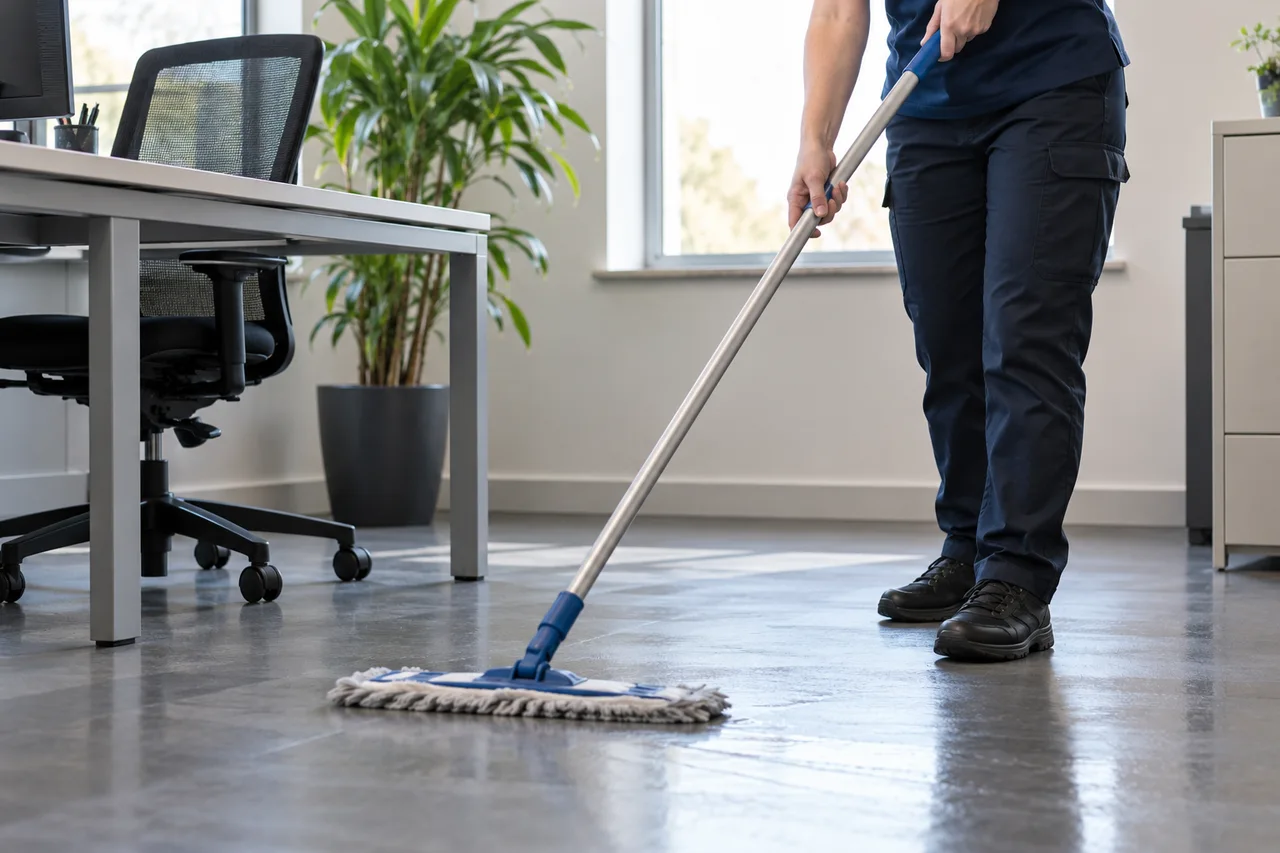
Office floors may combine carpet tiles, vinyl, timber and stone. Tell us about the materials and any care restrictions. A floor that looks like wood may need a different approach from sealed timber, and excess moisture is not appropriate for every finish. Slippery or damaged areas should be reported rather than disguised by a routine clean.
Embedded carpet soil and stained fabric chairs may need dedicated textile work. See carpet cleaning and upholstery cleaning to discuss those separately. Vacuuming around a desk does not equal extraction treatment, and wiping a chair frame does not include cleaning its fabric seat.
Repairs, high-level work, hazardous waste and extensive post-construction debris are not assumed within an ordinary office clean. Describe anything unusual before booking. For example, a room being reopened after building work may need assessment of the debris and surfaces before a suitable service can be confirmed. Do not simply add it to the daily list as another floor to mop.
HANDOVER & REVIEW
Keep the brief useful
after the first visit.
Use the original task list to check the completed work. Record specific areas and observations rather than a general comment that the office needs to be better. If a surface was inaccessible because papers remained in place or a meeting overran, note that too. It helps distinguish a missed task from a room that could not be entered.
As staff attendance changes, review the arrangement. A hybrid office may need different attention on busy days, and a new meeting room adds work even if the company headcount stays the same. Discuss changes before they become an expectation. Keeping the scope current makes a continuing arrangement easier to manage and avoids repeated misunderstandings.
For a single reset of an occupied workspace, explain the immediate priorities when asking about one-off cleaning. If you manage residential property as well, the end of tenancy cleaning service has a separate handover scope. Call Bob’s with the office postcode and a concise brief so the right work can be discussed.
| Action | Purpose |
|---|---|
| Clear paperwork | Leaves agreed surfaces accessible without handling documents. |
| Name a contact | Provides a route for access and scope questions. |
| Flag restrictions | Protects rooms, equipment and building procedures. |
| Confirm supplies | Avoids assumptions about consumables and storage. |
BEFORE YOU BOOK
The questions
worth asking.
Can the visit take place outside working hours?
Discuss the available access window and site requirements before booking. Availability and any related charge need confirming for the premises.
Will cleaners move confidential papers?
Arrange for staff to clear documents. Do not assume papers will be moved, sorted or discarded as part of desk cleaning.
Does the service include IT equipment?
General cleaning does not include internal equipment maintenance or dismantling. Agree any treatment of accessible external surfaces and your site restrictions.
Are kitchen appliances included?
Specify appliance interiors separately. Worktops, sinks and appliance exteriors do not automatically mean a fridge or oven deep clean is included.
Can you clean office carpets too?
Ask about a separate carpet cleaning scope. The material, area, condition and drying schedule need checking alongside normal office use.
How is the price calculated?
A tailored quotation considers layout, use, frequency, tasks and access. Confirm the full brief and total rather than applying a household cleaning rate.
GOOD TO TALK
Tell us what
needs attention.
Have the postcode, the main tasks and your preferred date ready.