
SOFAS, ARMCHAIRS & THE SEAT YOU ALWAYS CHOOSE
Upholstery cleaning
London
A closer look
at everyday comfort.
Arrange upholstery cleaning for fabric furniture in your London home or rental property. Start with the item, its care label and the marks you would like us to assess.
START WITH THE UPHOLSTERY
The fabric matters
as much as the mark.
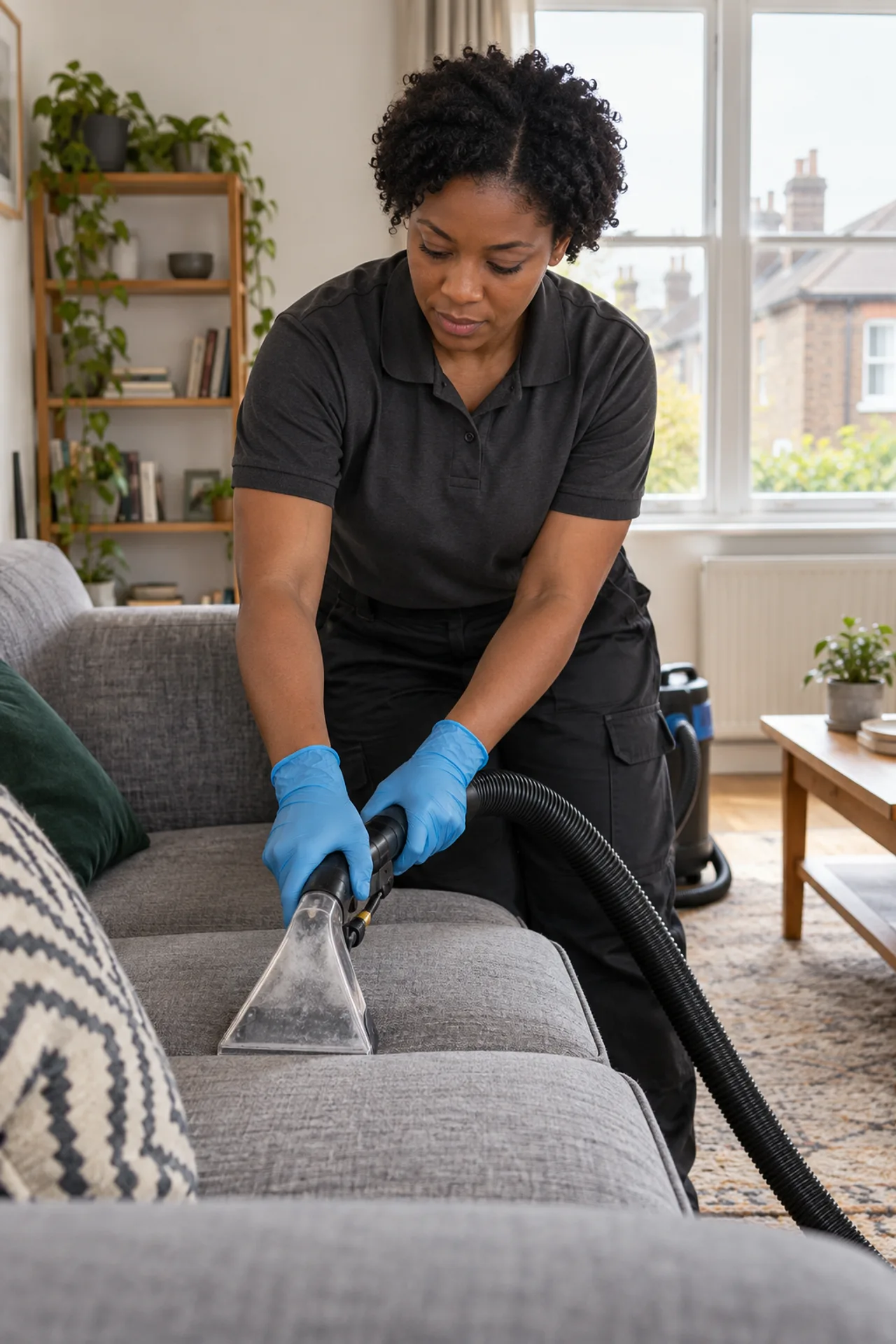
A sofa collects more than the occasional visible spill. Dust works into seams, the arms receive repeated contact and one cushion often gets far more use than the others. Upholstery cleaning addresses recoverable soil within the agreed areas of the furniture. It is a textile service, so choosing a suitable method matters more than treating every item in exactly the same way.
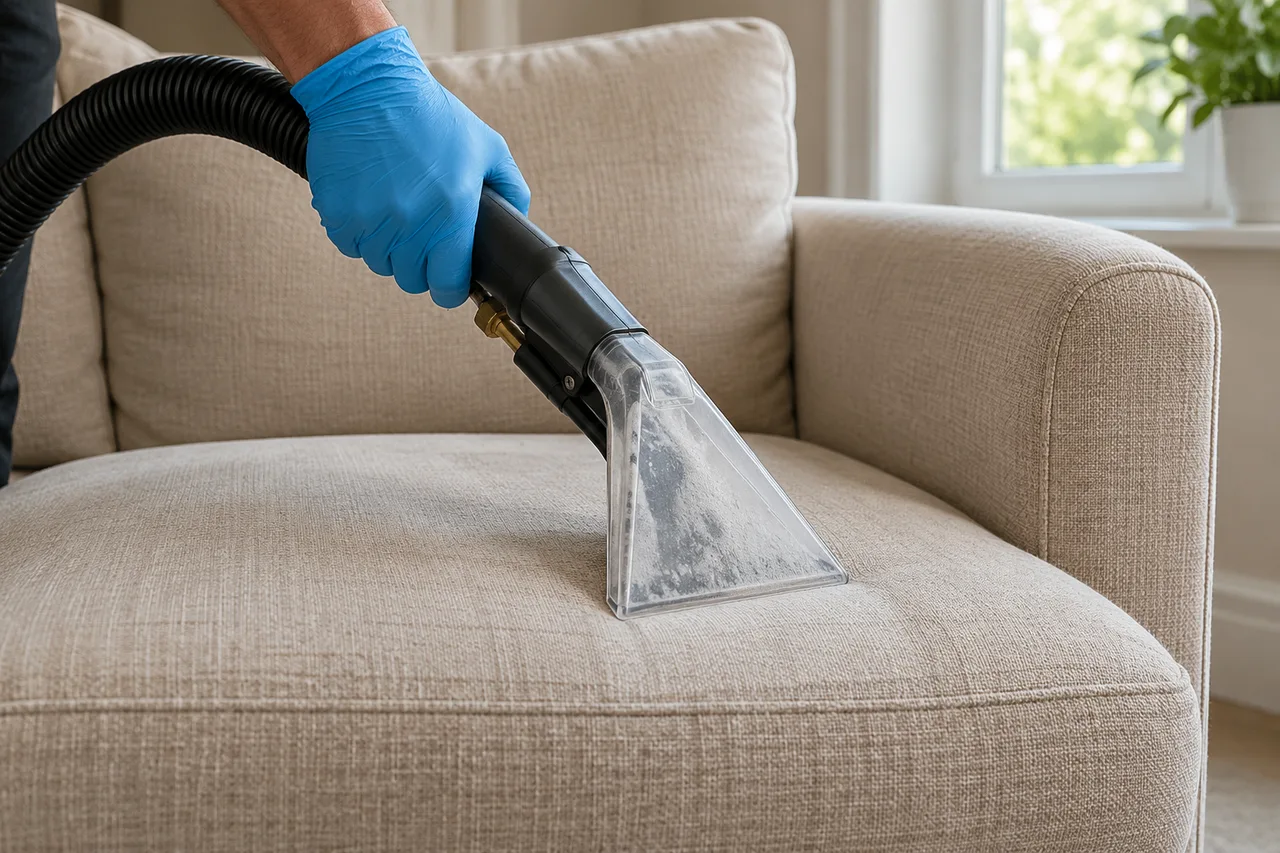
Tell us whether the item is a sofa, armchair, dining chair or footstool, and give the number of seats and approximate size. Include fixed cushions, a chaise section or a recliner mechanism in the description. A photograph of the whole item and its care label is useful, but it does not replace checking the fabric and its condition before cleaning.
Some fabrics tolerate moisture better than others. Natural fibres, textured pile, loose dyes and mixed upholstery can make treatment more involved. If the material is unknown, say so rather than selecting a method yourself. Bob’s can discuss the furniture and the available cleaning approach, including any limitations that need resolving before a visit is agreed.
DESCRIBING YOUR FURNITURE
A seat is not
always a simple unit.
A compact two-seat sofa and a large corner unit do not present the same amount of fabric. Count the seats, but also describe the overall shape, depth, detachable cushions and any extra sections. If the furniture is a sofa bed, explain whether you want only the upholstery treated or are enquiring about another part of the item. The mechanism itself is not a cleaning repair task.
A furnished rental needs a clear item list. Check the inventory so that an armchair or separate footstool is not missed. If you are a tenant, establish permission for specialist treatment where needed and share any care information supplied by the landlord. A landlord’s description of a sofa as washable is not a substitute for the manufacturer’s instructions.
Furniture should remain accessible around the areas to be worked on. Move small belongings away and remove throws and personal items, but do not dismantle a heavy sectional sofa yourself. Ask what can safely be moved and which backs, sides or cushion faces are in scope. This is especially useful when a sofa sits tight against a wall in a small London flat.
A PRACTICAL FURNITURE CHECKLIST
What to agree
before treatment.
Agree the expected result in practical terms: cleaner accessible fabric with the best treatment the material safely permits. Avoid relying on a promise that every stain will disappear. Cleaning does not tighten stretched upholstery, replace flattened foam or correct a damaged frame. Existing tears and loose trim should be recorded so that everyone understands the condition before work starts.
| Part | Discuss at booking | Important boundary |
|---|---|---|
| Seats and cushions | Number, construction and accessible faces. | Loose covers are not automatically machine washable. |
| Arms and back | Contact areas, visible marks and overall size. | Worn pile and fading are not removable dirt. |
| Seams and crevices | Accessible gaps and trapped loose debris. | Repairs to seams or filling are separate. |
| Footstool or dining chairs | List each additional piece. | Not included simply because they match the sofa. |
STAINS, ODOURS & LIMITS
Spills have a history.
Tell us what was spilt, how long ago it happened and what has already been applied. Drinks containing milk or sugar leave different residues from an oily cosmetic. Shop sprays, excessive water or repeated scrubbing can change the fabric and make later treatment more difficult. Even a faint mark may need caution if the care information is unclear.
Pet accidents can pass through the surface into the cushion filling or another layer. Surface cleaning may improve the fabric without resolving contamination deeper inside the item. Mention recurring odour before requesting a quote. It is better to discuss an uncertain outcome early than to book on the assumption that odour always has a simple surface cause.
Sun fading, dye transfer and worn pile can remain after soil has been removed. In some lighting, the direction of a fabric’s pile can also make one area appear darker. Look at the whole item and explain the change you have noticed. The cleaner can then distinguish the areas needing attention from patterns caused by the way the material reflects light.
QUOTING THE ITEM
Starting prices
for fabric furniture.
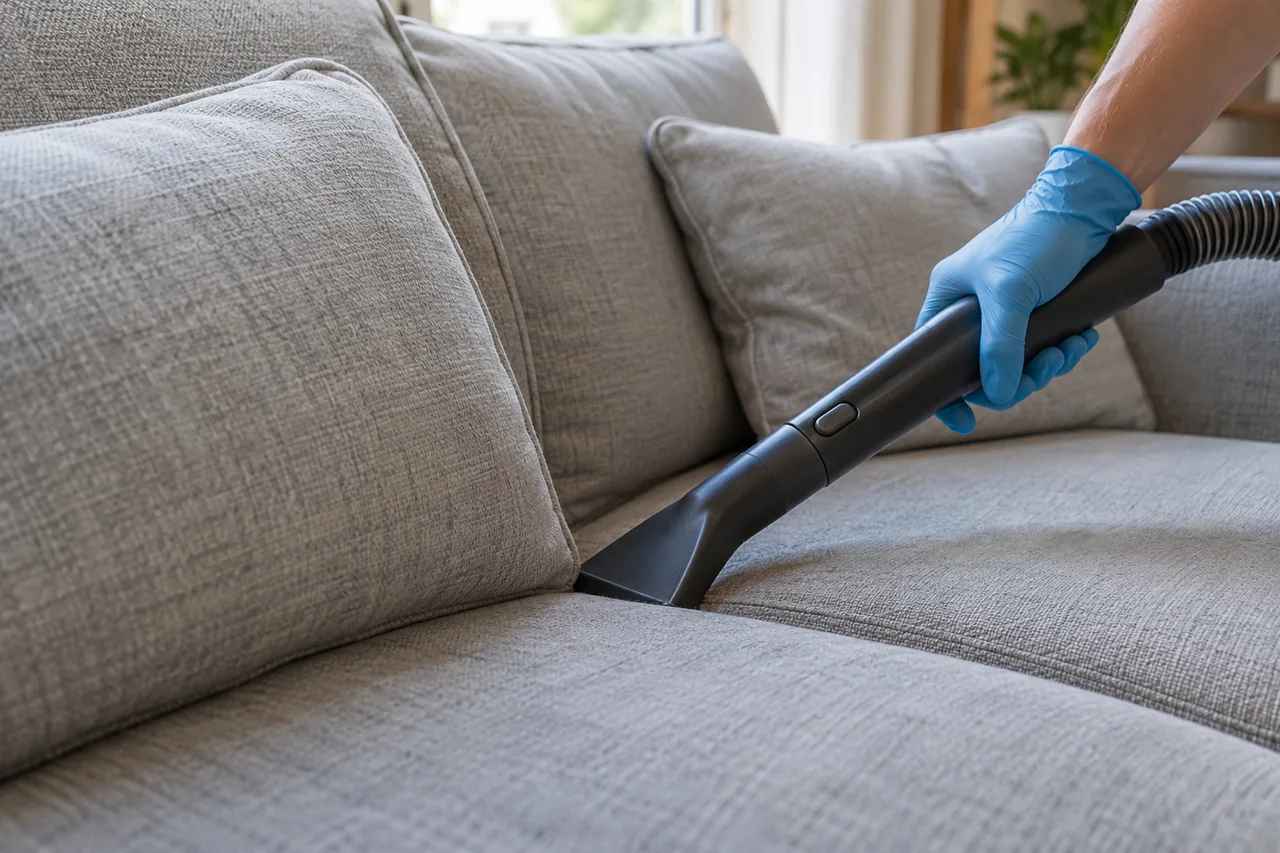
A minimum booking charge of £68 applies. A small chair or a single seat therefore does not necessarily form a complete booking at its individual starting price. Dimensions, fabric, condition, access and appointment availability can affect the final total. Applicable congestion charges are additional. Confirm the complete price and the exact pieces of furniture before the appointment.
The table covers the listed standard furniture scope. Do not infer that specialist dry treatment, fabric protection or structural work is included. If the item has a delicate finish or unusual construction, ask for the appropriate assessment and quote. Keep unrelated carpet or room-cleaning work separate in the description so the overall booking remains clear.
| Furniture | Basis | Price |
|---|---|---|
| Armchair | One item | From £32 |
| Sofa | Per seat | From £33 |
| Two-seat sofa | Two seats | From £66 |
| L-shaped three-seat sofa | Confirm size and layout | From £132 |
| Dining or office chair | One chair | From £10 |
| Footstool | One item | From £32 |
PREPARATION & AFTERCARE
Make space.
Then allow drying time.
Remove cushions or covers only if instructed, and do not wash a cover because it has a zip. A zip may allow manufacture or replacement of the filling without making the cover washable. Keep the care label available. Clear the floor around the item and arrange access to water and electricity where required, particularly in a vacant property.
After wet treatment, furniture needs time before normal use. Fabric, filling, airflow, temperature and the amount of moisture applied all influence drying. There is no useful fixed promise that applies to every sofa. Avoid scheduling guests to use the item immediately afterwards or covering damp upholstery with throws and cushions that restrict airflow.
Follow the advice given at handover and keep children and pets away from damp fabric. Where ventilation is practical and secure, allow air to circulate. Check the result when the furniture is dry rather than repeatedly touching or rubbing a treated patch. If you notice a concern, contact Bob’s with the item and area involved before adding another cleaning product.
CONNECTED TASKS, SEPARATE METHODS
Furniture in a
wider property clean.
For a rental check-out, combine the item list with the wider end of tenancy cleaning scope. Ask explicitly whether upholstery is included in the quote. The presence of a sofa in a room does not make specialist fabric treatment part of a general dusting and vacuuming checklist. That distinction helps tenants and landlords compare the booking with the property inventory.
If the carpet also needs extraction, see carpet cleaning. Although both are textile services, equipment settings and suitability need to be considered for each material. For an occupied room with dusting and hard-floor work as well as furniture, one-off cleaning can be discussed as a separate set of priorities.
London flats sometimes have limited room for equipment or drying. Mention narrow access, lift rules and the position of the furniture when booking. If the sofa is being moved to another property, allow the treatment and drying to fit around that move. Packing or wrapping a damp item is not a helpful shortcut when a removal collection is approaching.
| Concern | Practical expectation |
|---|---|
| Loose dirt | Accessible soil can be addressed by suitable cleaning. |
| Old stain | Treatment depends on material and previous products. |
| Worn fabric | Cleaning does not replace missing or flattened fibres. |
| Frame or filling | Repairs and replacement are not upholstery cleaning. |
BEFORE YOU BOOK
The questions
worth asking.
Can I wash zipped cushion covers first?
A zip does not mean a cover can be washed. Check the care instructions and discuss preparation before removing covers or using a machine.
Is the price per sofa or per seat?
The table identifies the basis. Describe the whole item, including chaise or corner sections, and confirm the total rather than multiplying a seat count without checking.
Will the sofa be dry immediately?
Wet treatment normally needs drying time. The material, filling and room conditions affect it. Follow the handover advice before using or covering the furniture.
Can you remove every pet smell?
No outcome can be guaranteed. Contamination may reach the filling or a layer beneath the visible fabric. Explain the history before booking.
Does upholstery cleaning include leather?
Do not assume a fabric service covers leather or another specialist finish. Identify the material and ask about suitability and availability first.
Can I book one armchair?
You can enquire about a single item. The £68 minimum booking charge applies, so confirm the complete price and any other pieces you want included.
GOOD TO TALK
Tell us what
needs attention.
Have the postcode, the main tasks and your preferred date ready.