
DIY vs Professional Cleaning: Which One Actually Protects Your Deposit?
DIY vs Professional Cleaning
- Understand the Real Difference Between DIY and Inspection-Level Cleaning.
- Avoid Common Mistakes That Lead to Deposit Deductions.
- Know When DIY Cleaning Is Actually Enough.
- Understand When Professional Cleaning Becomes Necessary.
Choosing between cleaning the property yourself or hiring professionals can feel like a simple decision, but it often becomes the reason tenants lose part of their deposit. This guide breaks down the real difference between DIY and professional cleaning, helping you avoid costly mistakes and make the right decision before moving out.

There’s always that moment near the end of a tenancy where you pause and think, “Do I really need to pay for cleaning, or can I just handle this myself?”
On paper, doing it yourself makes sense. You’ve lived in the property, you know where things are, and it doesn’t look particularly bad. Spending money on cleaning can feel unnecessary, especially when you’re already dealing with moving costs.
But the situation changes the moment you start preparing the property properly.
You open cupboards you haven’t checked in months. You notice the inside of the oven isn’t as clean as you thought. You move furniture and realise the carpet looks different underneath. The bathroom feels clean, but certain marks don’t come off no matter how much you scrub. Suddenly, it’s not just about cleaning — it’s about whether the place will pass inspection without any issues.
This is where the real meaning of DIY vs professional cleaning becomes clear. It’s not a question of effort. It’s a question of whether the final result matches what landlords and agents actually expect.
What DIY Cleaning Really Demands
Most tenants don’t fail at DIY cleaning because they don’t try. They fail because the job is more technical and time-consuming than it appears at first glance.
The time commitment is easy to underestimate
At first, it feels like something you can fit into a few hours. You might plan to clean the kitchen, vacuum the floors, wipe surfaces, and be done by the end of the day. In reality, proper move-out cleaning is not a surface-level task.
Every cupboard needs to be emptied and wiped internally. Appliances need more than a quick clean. Bathrooms require attention to detail that goes beyond everyday maintenance. When you add all of this together, the process becomes much longer than expected.
A tenant in Wandsworth once set aside half a day to clean before handing over the keys. By the evening, they were still working through the kitchen, and the rest of the property had to be rushed. The result wasn’t poor, but it wasn’t consistent either — and that inconsistency was enough to lead to deductions.
You clean based on habit, not inspection criteria
The biggest difference between DIY and professional cleaning is not effort — it’s perspective.
When you clean your own home, you aim for a level that feels comfortable. You clean what you use regularly and what looks dirty. Inspections, however, are based on what can be checked, not what feels clean.
That means areas like the inside of appliances, edges of carpets, and internal storage spaces become important. These are not areas most people focus on during normal cleaning routines. This mismatch is where problems start to appear.
Certain tasks require more than basic cleaning
There are elements of the property that require more than time and effort to handle properly. The oven is one of the clearest examples. It may appear manageable until you try to remove grease that has built up over time.
Carpets create a similar challenge. Vacuuming improves the surface, but deeper marks and odours remain. Upholstery, especially in furnished properties, can hold dust and smells that aren’t immediately obvious but become noticeable in an empty space.
These are not impossible tasks, but they are difficult to complete to a high standard without proper tools and experience.
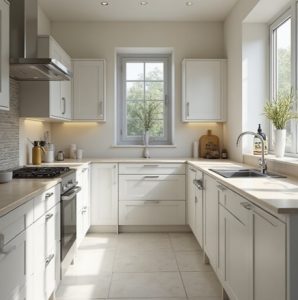
What Professional Cleaning Does Differently
The value of professional cleaning is not just in doing the work — it’s in how the work is approached.
The process is built around expectations, not appearance
A professional end of tenancy cleaning service is structured around what landlords and agents are likely to check. This means the focus is not on making the property look tidy, but on making sure it meets the conditions recorded at the start of the tenancy.
Instead of working room by room in a general way, cleaners follow a checklist that ensures nothing important is missed. This includes areas that tenants often overlook, such as internal appliance parts, hidden corners, and detailed bathroom cleaning.
High-risk areas are handled properly the first time
Certain areas are known to cause issues during inspections, and these are treated with priority.
Ovens, for example, are rarely cleaned thoroughly during DIY efforts, which is why oven cleaning is one of the most common reasons for deductions. Professional cleaning ensures that internal grease and residue are removed properly.
Carpets are another key area. Once a property is empty, any marks or wear become more visible, which is why carpet cleaning is often expected rather than optional. In furnished properties, upholstery cleaning plays a similar role, as it addresses dust and odours that are not obvious during everyday use.
It creates consistency across the property
One of the main issues with DIY cleaning is inconsistency. Some areas are cleaned well, while others are rushed. During inspection, this uneven result becomes noticeable.
Professional cleaning creates a consistent standard across the entire property. Every room, surface, and detail is treated with the same level of attention, which reduces the chances of something being flagged.
Real Examples Where DIY Cleaning Doesn’t Hold Up
A tenant in North London spent an entire day cleaning their flat and felt confident about the result. During inspection, the agent opened the oven and found grease that had not been removed. Despite the rest of the property being clean, that one issue led to a deduction.
Another tenant cleaned their carpets thoroughly, but once the furniture was removed, areas of wear became visible. The landlord arranged professional cleaning and deducted the cost, even though the tenant had already spent time trying to handle it themselves.
In a shared property, cleaning was divided between tenants. Each person completed their part, but no one reviewed the property as a whole. Several small issues were missed, and together they resulted in a larger deduction than expected.
These situations are common because the problem is not lack of effort — it is lack of alignment with inspection expectations.
When DIY Cleaning Can Be a Reasonable Choice
There are situations where doing it yourself is a practical option, but they are more specific than most people assume.
If the tenancy has been short and the property has not been heavily used, cleaning may be manageable. If the property was not professionally cleaned at the start, the required standard may be lower. If you have enough time and are willing to focus on detail, it can work.
The key factor is not whether you can clean, but whether you can achieve the required result without rushing or missing important areas.
When Professional Cleaning Becomes the Practical Option
In most real situations, the decision is not about preference — it is about reducing risk.
If you are short on time, DIY cleaning becomes unreliable. This is especially true in situations that turn into last-minute end of tenancy cleaning, where pressure leads to shortcuts and missed details.
If the property was professionally cleaned before you moved in, you are expected to return it to that same level. Matching that standard without the right tools is difficult.
If your goal is to avoid disputes and secure your full deposit back, understanding what landlords actually check during inspection shows how detailed the process is. Even small oversights can lead to charges.
What Most People Only Realise Afterwards
Many tenants assume cleaning is judged fairly based on effort, but inspections are based on outcome.
If the property does not meet the expected standard, landlords often arrange a full clean rather than addressing individual areas. This means small missed details can lead to larger costs.
Trying to save money by doing everything yourself can sometimes have the opposite effect. The initial saving may seem worthwhile, but deductions can quickly outweigh it.
The expected standard is also fixed. It is based on how the property was presented at the start of the tenancy, not on how much time or effort you put in at the end.
What to Do Next
If you are deciding between DIY and professional cleaning, the best approach is to look at the situation objectively.
Walk through the property as if you are seeing it for the first time. Pay attention to areas that stand out once the space is empty. Consider whether you have enough time to clean everything properly, not just quickly.
Think about whether you can realistically achieve the required standard, especially in areas like carpets, ovens, and upholstery. Most importantly, focus on the outcome. The goal is not to clean the property — it is to pass inspection and avoid deductions.
It’s About Reducing Risk, Not Saving Effort
The conversation around DIY vs professional cleaning often focuses on cost, but the real issue is risk.
DIY cleaning can work, but only under the right conditions. Professional cleaning provides a more predictable result, especially when the property needs to meet a specific standard.
Want to Avoid Any Uncertainty?
If you want to hand back the property without worrying about deductions, the safest approach is to use a professional end of tenancy cleaning service. With proper carpet cleaning, oven cleaning, and upholstery cleaning, the property is prepared to meet inspection expectations.
Instead of relying on guesswork, you know everything has been handled properly — and that clarity is what protects your deposit.
FAQ
What You Should Know