
How to Guarantee Getting Your Full Deposit Back
Why Tenants Lose Their Deposit
- Know what agents check
- Don’t miss hidden areas
- Clean to inspection standard
You don’t lose your deposit because you didn’t clean — you lose it because you missed what actually gets checked. Final inspections are detailed, and small details make all the difference.
You only realise how strict a checkout inspection is when you’re standing there at the end of your tenancy, watching someone go through your home inch by inch.
At that moment, what felt clean yesterday suddenly doesn’t feel good enough. The agent opens the oven, checks inside cupboards, runs a hand along the top of doors, and pauses at things you hadn’t even noticed. It’s not dramatic, but it’s precise. And that precision is exactly where deposits are lost.
Most tenants don’t lose part of their deposit because they didn’t clean. They lose it because they didn’t clean in the way the inspection expects — and that’s where deposit back cleaning becomes critical.
What Really Happens During the Final Inspection
There’s a big difference between how tenants imagine the inspection and how it actually happens. It’s not a quick glance around the property. It’s a comparison exercise.
The agent will often have the original inventory report open, sometimes even with photos from when you moved in. They are not judging whether your home is “clean enough” in general terms. They are checking whether it has been returned in the same condition.
A tenant in North London once told me she spent nearly an entire day cleaning her flat before handing it back. When the inspection started, everything looked spotless at first glance. But then the agent opened the oven and noticed grease between the glass panels. They checked the extractor fan and found a sticky filter. Inside the kitchen cupboards, there were crumbs in the corners.
None of these things looked serious on their own. But together, they led to a deduction. That’s how it usually happens — not one big issue, but several small ones.
Why “Clean Enough” Usually Fails
The biggest mistake tenants make is cleaning based on their own standards.
You vacuum the carpet, wipe surfaces, clean the bathroom, and step back thinking everything looks good. And to be fair, it often does. But the inspection is not based on how it looks at a glance. It’s based on detail.
A landlord or agent is trained to look beyond the obvious. They’ll check edges, not just surfaces. They’ll look behind and inside things, not just what’s visible. They’ll notice smells, marks, and residue that you’ve become used to.
This is where the gap appears. Not between clean and dirty, but between “visibly clean” and “professionally clean”.
That gap is exactly where deposits get reduced — and why many tenants end up needing proper end of tenancy cleaning after the fact.
The Areas That Quietly Cause the Biggest Problems
Some parts of the property almost always cause issues, even when the rest looks perfect.
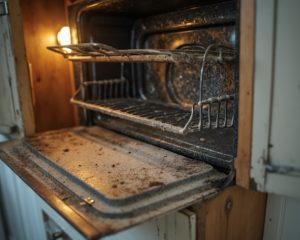
The kitchen is usually the biggest one. Grease builds up slowly, so you stop noticing it over time. The oven is the main problem. Many tenants clean the inside lightly but miss areas like the fan, the racks, or the glass panels. During inspection, those are the first things checked. This is why proper oven cleaning makes such a difference — it’s one of the easiest places for a landlord to justify a deduction.
Carpets are another common issue. They often look fine after a vacuum, but that doesn’t remove stains or deeper dirt. Sometimes it’s not even about visible marks, but a slight smell or general wear that becomes obvious when the property is empty. This is why many agents expect proper carpet cleaning rather than basic vacuuming.
Bathrooms tend to fail on small details rather than obvious dirt. Limescale around taps, faint marks on shower glass, or slight mould in silicone edges are all things tenants overlook. But these are exactly the areas an agent focuses on because they show how thoroughly the property has been cleaned.
If the property is furnished, furniture becomes another risk. Sofas and chairs can hold dust and odours even if they look clean. This is where upholstery cleaning becomes important, especially in properties that have been lived in for a while.
What Most Tenants Only Learn After Losing Money
There are a few realities about deposit returns that are rarely explained upfront, and most tenants only discover them after deductions have already happened.
One of the biggest is that landlords don’t try to fix things cheaply. If your cleaning doesn’t meet the standard, they won’t look for a budget option. They’ll use a cleaning company they trust and charge you the full amount. That amount is often higher than what you would have paid yourself.
Another important point is that your effort doesn’t count — only the result does. You might have spent hours cleaning, but if the final condition doesn’t match the inventory, it doesn’t matter how much work you put in.
Timing also plays a role. Leaving everything until the last evening almost always leads to missed details. You’re tired, rushing, and focused on moving logistics. That’s when small things get overlooked, and those small things are exactly what show up during inspection.
Real Situations That Lead to Deposit Deductions
These situations are more common than people expect.
A tenant in Stratford assumed that because they barely used the oven, it wouldn’t need much attention. During inspection, burnt residue at the bottom and grease on the racks were flagged. The deduction wasn’t huge, but it was avoidable — a proper oven cleaning would have solved it.
In another case, a tenant believed the carpet stains were already there when they moved in. Unfortunately, the inventory didn’t clearly show that. Without proof, the responsibility fell on them, and they were charged for carpet cleaning.
There was also a shared flat where two tenants divided the cleaning tasks. One handled the kitchen, the other the bathroom. Both did a decent job, but neither checked things like inside drawers or behind appliances. Individually small issues added up to a larger deduction.
What all these situations have in common is not carelessness, but assumption. Each tenant thought they had done enough.
The Standard You Actually Need to Meet
The most important shift is understanding that you’re not cleaning for yourself.
That means the property should not just look clean — it should feel untouched. No grease, no residue, no smells, no missed areas. It should match, as closely as possible, the condition it was in when you moved in.
For many properties, especially in London, that original condition is often a professional clean. Which means you’re expected to meet that same level — often through a proper end of tenancy cleaning.
What to Do Next If You Want Your Full Deposit Back
The safest way to approach this is to treat it as a process, not a last-minute task.
Start by reviewing your inventory report carefully. This tells you exactly what standard you need to return the property to. Pay attention to notes about carpets, appliances, and overall cleanliness.
Then be realistic about your situation. Cleaning properly takes time, effort, and the right tools. If you’re short on any of those, it becomes difficult to reach the required standard.
If you decide to do it yourself, focus heavily on the areas most likely to be checked — the kitchen, especially the oven, the carpets, the bathroom details, and inside storage spaces. These are where most deductions happen.
However, many tenants choose not to take that risk. A professional end of tenancy cleaning service is often the more reliable option, especially when it includes carpet cleaning, oven cleaning, and upholstery cleaning where needed. It removes uncertainty and ensures the property meets inspection expectations.
Whatever route you choose, document everything. Take clear photos after cleaning and keep any receipts. This gives you protection if anything is questioned later.
When It Stops Being Worth the Risk
There are situations where trying to handle everything yourself can backfire.
If the property was professionally cleaned before you moved in, you’re expected to return it to that same level. If your tenancy agreement mentions professional cleaning, the expectation is even clearer. And if the property has carpets or furniture, the chances of missing something increase significantly.
In these cases, trying to save money on cleaning can end up costing more in deductions — especially if you skip proper deposit back cleaning standards.
Want to Leave Without Worrying About Deductions?
If you’d rather not second-guess the inspection or risk losing part of your deposit, the safest approach is to have the property cleaned properly from the start.
A complete end of tenancy cleaning service, including carpet cleaning, oven cleaning, and upholstery cleaning where needed, ensures the property is ready for inspection.
It’s not just about convenience. It’s about removing risk, avoiding disputes, and handing back the keys knowing there’s nothing left for the landlord to flag.
