
Why Ovens Are the Most Failed Area During Inspections
Why Ovens Are the Most Failed During Inspections
- Grease turns into hard carbon build-up
- Hidden areas are always checked
- Surface cleaning is not enough
- DIY products do not fully break down residue
- Time pressure before moving out
- Condition must match check-in report
Oven cleaning is not treated as a “basic cleaning task” during inspections. It is assessed against professional standards, and even minor residue can lead to deductions. Tenants who underestimate this often end up in disputes or paying for landlord-arranged cleaning after checkout.
Make an appointment
We proudly offer a deposit back guarantee with every end of tenancy clean. Thanks to our 168-hour re-clean policy, if your landlord or letting agent raises any issues, we’ll return and fix them free of charge. This way, you can move out stress-free knowing your property meets professional standards.
"*" indicates required fields
Most tenants don’t expect the oven to be the reason they lose part of their deposit. Yet in practice, it’s one of the most common failure points during check-out inspections. Not because people don’t clean, but because they clean in a way that doesn’t match what letting agents actually expect.
It often plays out the same way. Everything else in the flat is done properly. The floors have been hoovered and mopped. The bathroom is spotless. Bins are cleared, cupboards wiped, windows cleaned. Then the inspection report comes back with one line that causes the problem: “Oven not cleaned to a professional standard.” At that point, it’s already too late to fix it.
This is exactly where oven cleaning tenancy inspection issues begin—not from neglect, but from misunderstanding the standard.
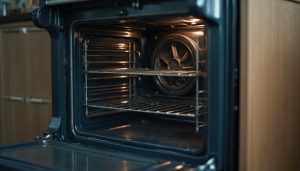
What Agents Actually Check in an Oven
Most tenants assume an oven inspection is a quick visual check. In reality, it is one of the most detailed parts of the entire property inspection.
Agents will usually open the oven fully and check the door edges closely. They inspect the glass panels, not just the outer surface. Racks are removed so they can look at the sides, base, and back wall. They also check the fan area and interior roof where grease tends to build up unnoticed.
Even small traces of grease transfer on a tissue or finger can be enough for a failed remark. It’s not about whether the oven looks presentable at a glance. It’s about whether it matches the original condition recorded at check-in.
Why Ovens Fail Even When Tenants Try Hard
The most frustrating part for tenants is that many ovens fail despite genuine effort. The issue is not effort—it’s how ovens hold dirt.
Heat changes everything inside an oven. Grease doesn’t stay as a liquid layer. It hardens into a thick carbon-like coating. Food splashes burn into enamel surfaces. Smoke residue settles into corners and becomes almost invisible until you start scrubbing.
At that point, standard cleaning products struggle. Wiping removes surface grease, but the deeper layers remain untouched. That is why even after a long cleaning session, the oven can still fail inspection.
Another problem is access. The most important areas are often hidden. The space between glass panels, the inner door frame, the fan cover, and the top interior panel are all common failure points. These are not areas most tenants dismantle or even realise need attention.
Real-Life Situations That Lead to Failed Inspections
A very common situation is the “it looked fine to me” scenario. A tenant spends an evening cleaning the oven using supermarket degreaser. The trays look clean, the interior is wiped down, and the glass looks clear from the outside.
During inspection, the agent notices grease trapped between the door glass, burnt residue on the roof of the oven, and build-up around the fan. The result is a professional cleaning charge deducted from the deposit.
Another frequent case happens in shared flats. Multiple tenants use the oven heavily over time, but no one performs a deep clean during the tenancy. When one person moves out, they are left with months of build-up that they did not personally create. Even after cleaning, the layered grease remains baked in, and the inspection fails.
There is also the situation where tenants try to “leave it for the landlord.” This usually results in a higher cleaning charge being added after checkout, often more expensive than arranging it independently in the first place.

Why DIY Cleaning Rarely Meets Inspection Standards
The gap between DIY cleaning and inspection standards is bigger than most tenants expect. Household products are designed for light grease removal, not long-term carbon build-up.
Even strong degreasers struggle to break down burnt residue that has been baked in over months. Without dismantling parts like racks, side panels, or the door glass, many of the critical areas simply remain untouched.
This is why ovens can appear clean but still fail. The surface is improved, but the structure is not restored.
That difference is exactly what leads to oven fails inspection reports even after tenants feel they have done everything correctly.

What Professional Oven Cleaning Actually Achieves
Professional cleaning is not just about making an oven look better. It is about restoring it to a standard that matches inventory expectations.
A proper deep clean involves removing all detachable parts and soaking them separately. Internal surfaces are treated with stronger but safe degreasers that break down carbon build-up. The fan area, roof, and back panel are cleaned thoroughly. The door glass is separated where possible so grease trapped between layers can be removed.
The result is not just visual improvement but full restoration of all inspection points. This is why deep oven cleaning tenancy services are often the difference between passing and failing check-out.
Timing Is a Critical Factor Most Tenants Miss
When oven cleaning is done matters almost as much as how it is done.
If it is done too early in the move-out process, the oven may be used again or get dusty during packing. If it is left until the final day, there is usually too much pressure to finish everything quickly, which leads to missed areas.
The most reliable approach is to clean the oven after it is no longer needed and as part of the final end of tenancy clean. This ensures no re-use and allows proper attention to detail.
The Real Cost of Getting It Wrong
Skipping proper oven cleaning is rarely a saving. In most cases, it creates a higher cost later.
Landlords and letting agents typically arrange professional cleaning if the oven fails inspection. These charges are often higher than standard market rates and are deducted directly from the deposit. On top of that, delays in deposit return are common while cleaning disputes are processed.
Tenants who handle it correctly upfront avoid these issues entirely. The cost becomes predictable, and the risk of deductions is significantly reduced.
Why the Oven Matters More Than Other Areas
Unlike floors or surfaces, the oven is not forgiving. Small missed areas are visible during inspection. It cannot be “almost clean.” It either meets standard or it does not.
That is why it is one of the most frequently flagged items in check-out reports. It carries more weight because it is directly linked to hygiene, usage, and long-term maintenance.
Even when the rest of the property is in excellent condition, a poorly cleaned oven can still affect the final outcome of the inspection.
Why Getting the Oven Right Protects Your Deposit and Avoids Disputes
Most deposit disputes do not come from major damage. They come from small areas that do not meet professional expectations.
The oven is the clearest example of this. It looks simple to clean, but it is technically one of the most demanding areas in the entire property.
Understanding why ovens fail inspection is not just about avoiding a deduction. It is about recognising that certain parts of a tenancy require a higher standard than everyday cleaning can achieve.
When handled properly, it removes uncertainty from the check-out process and significantly increases the chance of a full deposit return without delays or disputes.
FAQ
Common Questions Tenants Ask About Oven Cleaning and InspectionsWhat Our Clients Say

“I booked Bobs Tenancy Cleaning for my flat in Hackney, and I couldn’t be happier. The cleaners were punctual, professional, and my landlord was impressed with how spotless everything was!”
“The team at Bobs Tenancy Cleaning made moving out stress-free. From the kitchen to the carpets, everything was cleaned to perfection. Highly recommend for anyone needing a reliable tenancy clean in London.”
“Bobs Tenancy Cleaning took care of everything when I moved out of my Canary Wharf apartment. The team handled the kitchen, bathroom, and carpets brilliantly. The whole process was smooth and professional.”
“I used Bobs Tenancy Cleaning for my 2-bedroom flat in Islington, and the service was exceptional. Their attention to detail and quick turnaround made getting my deposit back completely hassle-free.”
“I can’t recommend Bobs Tenancy Cleaning enough. They cleaned every corner of my flat in Ealing, leaving it spotless for the final inspection. The 168-hour re-clean guarantee gave me peace of mind too!”
“Fantastic service! The cleaners arrived on time and worked efficiently. My landlord commented on how immaculate the property looked. I’ll definitely use Bobs Tenancy Cleaning again for my next move.”
